An exhibit called "Timeless" features about 30 of Lennon's hand-signed portrait and landscape photographs and will run Dec. 1-5 at Miami's Adrienne Arsht Center for the Performing Arts.
Prints of his photographs will sell for about $3,500 each, with a portion of the proceeds to go to the White Feather Foundation that he launched to further environmental and humanitarian causes.
Lennon, 47, said Tuesday in a telephone interview from France that the exhibit will include photographs he took of the rock band U2, but those won't be sold because those might be used for an upcoming U2 album. He said those taken in a photojournalism style show the reality of his subjects.
"I am not going to do anybody any favors by covering the truth, but also I am not here to make people look bad either," he said.
He also said his exhibition includes works created in a painting-like style, including photographs of clouds that he called "a serious passion."
He said many of those photographs bring him a sense of peace.
"For me it's very much about finding a time and a place to feel a little at peace. It's a Zen moment. It's almost like meditation. It's finding an image that makes me feel at peace and also close to Mother Nature and our surroundings," he said.
Lennon said he has been taking photos for years, but it wasn't until he went on tour with his younger brother Sean a few years ago and took some backstage photos of him that he "really fell in love with it."
Some of Lennon's photos also can be purchased at the SCOPE Miami Art Show, a satellite art fair running from Nov. 30 to Dec. 5.
Lennon's first photo exhibit was in September and he is going to release a new album next year called "Everything Changes."

An exhibit called "Timeless" features about 30 of Lennon's hand-signed portrait and landscape photographs and will run Dec. 1-5 at Miami's Adrienne Arsht Center for the Performing Arts.
Prints of his photographs will sell for about $3,500 each, with a portion of the proceeds to go to the White Feather Foundation that he launched to further environmental and humanitarian causes.
Lennon, 47, said Tuesday in a telephone interview from France that the exhibit will include photographs he took of the rock band U2, but those won't be sold because those might be used for an upcoming U2 album. He said those taken in a photojournalism style show the reality of his subjects.
"I am not going to do anybody any favors by covering the truth, but also I am not here to make people look bad either," he said.
He also said his exhibition includes works created in a painting-like style, including photographs of clouds that he called "a serious passion."
He said many of those photographs bring him a sense of peace.
"For me it's very much about finding a time and a place to feel a little at peace. It's a Zen moment. It's almost like meditation. It's finding an image that makes me feel at peace and also close to Mother Nature and our surroundings," he said.
Lennon said he has been taking photos for years, but it wasn't until he went on tour with his younger brother Sean a few years ago and took some backstage photos of him that he "really fell in love with it."
Some of Lennon's photos also can be purchased at the SCOPE Miami Art Show, a satellite art fair running from Nov. 30 to Dec. 5.
Lennon's first photo exhibit was in September and he is going to release a new album next year called "Everything Changes."
The founder of WikiLeaks, Julian Assange, has launched a verbal broadside against US technology magazine Wired, claiming the publication "has [an] agenda, doesn't check facts and is not to be trusted".
Assange, the editor-in-chief of the controversial whistleblowing website, also claimed the Condé Nast title is a "known opponent and spreader of all sorts of minsinformation about WikiLeaks", pointing to what he claimed were false reports in the magazine that the site was due to release as many as 500,000 classified US documents from the Iraq war online on Monday.
Kevin Poulsen, a senior editor at Wired, is "responsible for a tremendous amount of other completely false information [about] WikiLeaks", Assange alleged on Twitter.
Hours after WikiLeaks' combative dispatch, Poulsen hit back in a post on Wired's website. "Assange is notoriously sensitive to critical press," he wrote. "He has a strong personality, and at times his reaction reflects that."
The dispute stems from a Wired article about the circumstances of the arrest of 22-year-old US private Bradley Manning, who was subsequently charged with passing classified material relating to the Iraq war to WikiLeaks. Assange demanded an investigation into what role Wired played in the arrest, and now claims that the spread of "misinformation" has "dramatically ramped up" since then.
Assange went on to say that the claim made in a Wired blogpost published on Monday that WikiLeaks is preparing to release hundreds of thousands of classified documents on the Iraq war is "another fabrication".
Poulsen defended Wired from Assange's accusations, saying that the publication has charted both WikiLeaks' "successes, and its setbacks" and that no "substantive factual errors" had been published without correction.
"I won't claim that I wasn't affected by Assange's accusations last June — mostly channeled through proxies — that I played a role in the arrest of accused WikiLeaks' source Bradley Manning," he said. "But Assange is wrong to think that those false claims have changed the tone of our WikiLeaks coverage... We're pleased to be among a handful of news outlets that regularly break news about it, and we plan to go on, without favour or animosity."
The Pentagon yesterday urged news organisations not to publish classified documents due to be released by WikiLeaks, calling the site a "disreputable organisation".
Colonel David Lapan urged Wikileaks to "return the stolen documents to the United States government and [...] not publish them". He added: "The concern is that WikiLeaks as an organisation should not be made more credible by having credible news organisations facilitate what they're doing."
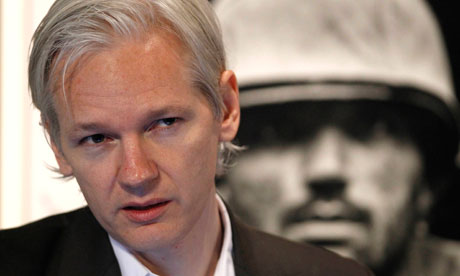
The founder of WikiLeaks, Julian Assange, has launched a verbal broadside against US technology magazine Wired, claiming the publication "has [an] agenda, doesn't check facts and is not to be trusted".
Assange, the editor-in-chief of the controversial whistleblowing website, also claimed the Condé Nast title is a "known opponent and spreader of all sorts of minsinformation about WikiLeaks", pointing to what he claimed were false reports in the magazine that the site was due to release as many as 500,000 classified US documents from the Iraq war online on Monday.
Kevin Poulsen, a senior editor at Wired, is "responsible for a tremendous amount of other completely false information [about] WikiLeaks", Assange alleged on Twitter.
Hours after WikiLeaks' combative dispatch, Poulsen hit back in a post on Wired's website. "Assange is notoriously sensitive to critical press," he wrote. "He has a strong personality, and at times his reaction reflects that."
The dispute stems from a Wired article about the circumstances of the arrest of 22-year-old US private Bradley Manning, who was subsequently charged with passing classified material relating to the Iraq war to WikiLeaks. Assange demanded an investigation into what role Wired played in the arrest, and now claims that the spread of "misinformation" has "dramatically ramped up" since then.
Assange went on to say that the claim made in a Wired blogpost published on Monday that WikiLeaks is preparing to release hundreds of thousands of classified documents on the Iraq war is "another fabrication".
Poulsen defended Wired from Assange's accusations, saying that the publication has charted both WikiLeaks' "successes, and its setbacks" and that no "substantive factual errors" had been published without correction.
"I won't claim that I wasn't affected by Assange's accusations last June — mostly channeled through proxies — that I played a role in the arrest of accused WikiLeaks' source Bradley Manning," he said. "But Assange is wrong to think that those false claims have changed the tone of our WikiLeaks coverage... We're pleased to be among a handful of news outlets that regularly break news about it, and we plan to go on, without favour or animosity."
The Pentagon yesterday urged news organisations not to publish classified documents due to be released by WikiLeaks, calling the site a "disreputable organisation".
Colonel David Lapan urged Wikileaks to "return the stolen documents to the United States government and [...] not publish them". He added: "The concern is that WikiLeaks as an organisation should not be made more credible by having credible news organisations facilitate what they're doing."