It has just been reported that Amb. Richard Holbrooke -- special U.S. envoy to Afghanistan and Pakistan and one of FP's earliest editors, has passed away after emergency surgery for a torn aorta. He was 69.
Holbrooke's untimely death comes as a particular shock to those of us at FP, who saw him only two weeks ago when he was honored at our Global Thinkers Gala and was at his pugnacious best. (Here's a video of his speech at the event, in which he called his years at FP "among the most important in my life and my career."
Holbrooke was a giant of American policy over the last half century, trouble-shooting in conflicts from Vietnam, to the Balkans, (about which he wrote his classic first-person account, To End a War) to Afghanistan. (He's probably one of the few State Department figures to play a starring role in both the Pentagon Papers and the WikiLeaks documents.)
But while often seen as the consummate Foggy Bottom insider, Holbrooke was never sentimental about the business of American foreign policy. His first piece from the very first issue of Foreign Policy in 1970 takes on the bloated U.S. foreign-policy bureaucracy, or has he called it, "the machine that fails." In Holbrooke's view, the proliferation of massively-staffed agencies accountable for different aspects of U.S. foreign policy had made the entirely apparatus dangerously unwieldy. But despite his skepticism, the piece also features a rousing defense of the ideals of the State department and American diplomats:
I do not pretend to have the definitive answers. But my own conclusion is that a major reduction in the number of organizations and chains of command must take place, or else the bureaucratic chaos will get worse, and more bypass mechanisms will be created, and more layers will spring up, and...
If this vital premise is accepted, then institutional change could follow one of several possible paths. ideally, the organization that is called the State Department could become the central point of the foreign affairs administrative structure. The balance of powers in our government is such that it would be a mistake to put central coordinating power into the hands of the NSC staff, which is immune to the legitimate and constitutional desire of Congress to play a role in policy through the appropriations process and through the confirmation of Presidential appointees, and hearings on policy. And much evidence piled up over the last decade shows that overreliance on a White House staff isolates the President from the great departments of government and leads to costly mistakes.
But only an ideal State Department, not today's State Department, could play the central role. Only a reformed organization, residing perhaps on the same physical shell but altogether different in internal structure, can do what must be done. Here, indeed, is where the greatest reforms, the most drastic surgery, must occur. More political appointees are surely needed, men on whom the President and the Secretary can rely; fewer FSO's on short Washington tours; a larger number of permanent Washington-based officials who understand both the Washington bureaucratic game and their regional specialty; much closer relationships between the other agencies (in whatever form they survive) and State; more authority to the desk officers and country directors, who should be aware of everything affecting U.S. relations with their country; and fewer layers between the desk officer and the Secretary of State.
In his description of the ideal combination of savvy Washington player and international specialist, Holbrooke might have been describing the role that he himself would play over the next four decades. As both a practitioner and critic of U.S. foreign policy-making he was unsurpassed. And in these trying times for American diplomacy, he will be missed

It has just been reported that Amb. Richard Holbrooke -- special U.S. envoy to Afghanistan and Pakistan and one of FP's earliest editors, has passed away after emergency surgery for a torn aorta. He was 69.
Holbrooke's untimely death comes as a particular shock to those of us at FP, who saw him only two weeks ago when he was honored at our Global Thinkers Gala and was at his pugnacious best. (Here's a video of his speech at the event, in which he called his years at FP "among the most important in my life and my career."
Holbrooke was a giant of American policy over the last half century, trouble-shooting in conflicts from Vietnam, to the Balkans, (about which he wrote his classic first-person account, To End a War) to Afghanistan. (He's probably one of the few State Department figures to play a starring role in both the Pentagon Papers and the WikiLeaks documents.)
But while often seen as the consummate Foggy Bottom insider, Holbrooke was never sentimental about the business of American foreign policy. His first piece from the very first issue of Foreign Policy in 1970 takes on the bloated U.S. foreign-policy bureaucracy, or has he called it, "the machine that fails." In Holbrooke's view, the proliferation of massively-staffed agencies accountable for different aspects of U.S. foreign policy had made the entirely apparatus dangerously unwieldy. But despite his skepticism, the piece also features a rousing defense of the ideals of the State department and American diplomats:
I do not pretend to have the definitive answers. But my own conclusion is that a major reduction in the number of organizations and chains of command must take place, or else the bureaucratic chaos will get worse, and more bypass mechanisms will be created, and more layers will spring up, and...
If this vital premise is accepted, then institutional change could follow one of several possible paths. ideally, the organization that is called the State Department could become the central point of the foreign affairs administrative structure. The balance of powers in our government is such that it would be a mistake to put central coordinating power into the hands of the NSC staff, which is immune to the legitimate and constitutional desire of Congress to play a role in policy through the appropriations process and through the confirmation of Presidential appointees, and hearings on policy. And much evidence piled up over the last decade shows that overreliance on a White House staff isolates the President from the great departments of government and leads to costly mistakes.
But only an ideal State Department, not today's State Department, could play the central role. Only a reformed organization, residing perhaps on the same physical shell but altogether different in internal structure, can do what must be done. Here, indeed, is where the greatest reforms, the most drastic surgery, must occur. More political appointees are surely needed, men on whom the President and the Secretary can rely; fewer FSO's on short Washington tours; a larger number of permanent Washington-based officials who understand both the Washington bureaucratic game and their regional specialty; much closer relationships between the other agencies (in whatever form they survive) and State; more authority to the desk officers and country directors, who should be aware of everything affecting U.S. relations with their country; and fewer layers between the desk officer and the Secretary of State.
In his description of the ideal combination of savvy Washington player and international specialist, Holbrooke might have been describing the role that he himself would play over the next four decades. As both a practitioner and critic of U.S. foreign policy-making he was unsurpassed. And in these trying times for American diplomacy, he will be missed
It was one of the great love affairs of the last century – a turbulent 20-year odyssey of lust, love and marriage (twice), all in the spotlight of Hollywood fame. Now, Elizabeth Taylor is offering glimpses into her passionate, often painful life with Richard Burton through his love letters to her.
In the letters, excerpted in the July issue of Vanity Fair, Burton, who died in 1984 at age 58, teases and cajoles, threatens and confesses – and tries to come to terms with his infatuation, love and need for Taylor.
"Richard was magnificent in every sense of the word," the actress, now 78, tells the magazine. "From those first moments in Rome [on the set of Cleopatra] we were always madly and powerfully in love."
But it was a love that had a dark side. They married twice and divorced twice, but never fully let go of each other. Among the highlights from Burton's letters:
• On his need for Taylor: "If you leave me I shall have to kill myself. There is no life without you."
• On her gifts as an actress: "You are probably the best actress in the world, which, com bined with your extraordinary beauty, makes you unique. … When, as an actress, you want to be funny, you are funnier than W.C. Fields; when, as an actress, you are meant to be tragic, you are tragic."
• On their misunderstandings: "You must know, of course, how much I love you. You must know, of course, how badly I treat you. But the fundamental and most vicious, swinish, murderous, and unchangeable fact is that we totally misunderstand each other … we operate on alien wave lengths."
On the idiocy of love: "I find it very difficult to allow my whole life to rest on the existence of another creature. I find it equally difficult, because of my innate arrogance, to believe in the idea of love. There is no such thing, I say to myself. There is lust, of course, and usage, and jealousy, and desire and spent powers, but no such thing as the idiocy of love. Who invented that concept? I have wracked my shabby brains and can find no answer."
• On his own acting: "I have never quite got over the fact that I thought and I'm afraid I still do think, that 'acting' for a man – a really proper man – is sissified and faintly ridiculous. … My heart, unlike yours, is not in it."
The one letter that Taylor declines to share publicly – though she read it aloud to a Vanity Fair reporter – was the last one he wrote to her, just days before his unexpected death from a brain hemorrhage. In that letter, which Taylor keeps in a bedside drawer, he says he was happiest in life when he was with her, and wonders if they might have another shot together.
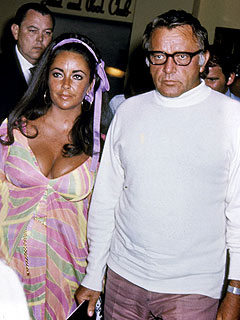
It was one of the great love affairs of the last century – a turbulent 20-year odyssey of lust, love and marriage (twice), all in the spotlight of Hollywood fame. Now, Elizabeth Taylor is offering glimpses into her passionate, often painful life with Richard Burton through his love letters to her.
In the letters, excerpted in the July issue of Vanity Fair, Burton, who died in 1984 at age 58, teases and cajoles, threatens and confesses – and tries to come to terms with his infatuation, love and need for Taylor.
"Richard was magnificent in every sense of the word," the actress, now 78, tells the magazine. "From those first moments in Rome [on the set of Cleopatra] we were always madly and powerfully in love."
But it was a love that had a dark side. They married twice and divorced twice, but never fully let go of each other. Among the highlights from Burton's letters:
• On his need for Taylor: "If you leave me I shall have to kill myself. There is no life without you."
• On her gifts as an actress: "You are probably the best actress in the world, which, com bined with your extraordinary beauty, makes you unique. … When, as an actress, you want to be funny, you are funnier than W.C. Fields; when, as an actress, you are meant to be tragic, you are tragic."
• On their misunderstandings: "You must know, of course, how much I love you. You must know, of course, how badly I treat you. But the fundamental and most vicious, swinish, murderous, and unchangeable fact is that we totally misunderstand each other … we operate on alien wave lengths."
On the idiocy of love: "I find it very difficult to allow my whole life to rest on the existence of another creature. I find it equally difficult, because of my innate arrogance, to believe in the idea of love. There is no such thing, I say to myself. There is lust, of course, and usage, and jealousy, and desire and spent powers, but no such thing as the idiocy of love. Who invented that concept? I have wracked my shabby brains and can find no answer."
• On his own acting: "I have never quite got over the fact that I thought and I'm afraid I still do think, that 'acting' for a man – a really proper man – is sissified and faintly ridiculous. … My heart, unlike yours, is not in it."
The one letter that Taylor declines to share publicly – though she read it aloud to a Vanity Fair reporter – was the last one he wrote to her, just days before his unexpected death from a brain hemorrhage. In that letter, which Taylor keeps in a bedside drawer, he says he was happiest in life when he was with her, and wonders if they might have another shot together.
BREAKING NEWS: A boy believed to have climbed into a balloon resembling a flying saucer that floated helplessly thousands of metres above Colorado has been found safe and well.
Falcon Heene was found hiding in the attic, fearing he was in trouble with his parents, after releasing the balloon.
The bizarre scene played out live on television and prompted fears that the flying saucer-shaped balloon would crash with the young child inside. The balloon rotated slowly in the wind, tipping precariously at times.
Television pictures from the scene showed the balloon had landed in farmland, but there was no sign of the boy.
Photographs emerged that appear to show an object that had fallen from the balloon sparking fears the child had fallen out of the balloon.
Click here to watch the video.
Officers also searched the child's home and surrounding area for signs of him.
The balloon travelled for more than two hours.
"The bottom of (the balloon) is contained and hasn't been breached," Eloise Campanella of Larimer County Sheriff's Department told CNN shortly after the balloon landed.
"So at this point we are thinking he did not fall out of it. He has to be somewhere on the ground near his home."
National Guard helicopters were scrambled and were monitoring the balloon when it landed.
Aviation experts said the boy could have survived the flight, but he would have been cold and possibly disoriented at high altitudes.
Cathy Davis of the Larimer County Sheriff's Department told reporters the experimental balloon was owned by the boy's parents and tethered behind the family's home.
She said two sons were playing outside when the older boy saw the younger one go into a plywood compartment at the bottom of the balloon and fly away as it slipped its rope tethers.
Falcon's father, Richard Heene, is a 'science detective' and storm chaser according to his My Space site.
He hosts a documentary series and radio show investigating the mysteries of science, The Science Detectives.
Last year, his site entry says, he flew into Hurricane Wilma to take magnetic field measurements and this year rode a motorcycle into a mesocyclone.

BREAKING NEWS: A boy believed to have climbed into a balloon resembling a flying saucer that floated helplessly thousands of metres above Colorado has been found safe and well.
Falcon Heene was found hiding in the attic, fearing he was in trouble with his parents, after releasing the balloon.
The bizarre scene played out live on television and prompted fears that the flying saucer-shaped balloon would crash with the young child inside. The balloon rotated slowly in the wind, tipping precariously at times.
Television pictures from the scene showed the balloon had landed in farmland, but there was no sign of the boy.
Photographs emerged that appear to show an object that had fallen from the balloon sparking fears the child had fallen out of the balloon.
Click here to watch the video.
Officers also searched the child's home and surrounding area for signs of him.
The balloon travelled for more than two hours.
"The bottom of (the balloon) is contained and hasn't been breached," Eloise Campanella of Larimer County Sheriff's Department told CNN shortly after the balloon landed.
"So at this point we are thinking he did not fall out of it. He has to be somewhere on the ground near his home."
National Guard helicopters were scrambled and were monitoring the balloon when it landed.
Aviation experts said the boy could have survived the flight, but he would have been cold and possibly disoriented at high altitudes.
Cathy Davis of the Larimer County Sheriff's Department told reporters the experimental balloon was owned by the boy's parents and tethered behind the family's home.
She said two sons were playing outside when the older boy saw the younger one go into a plywood compartment at the bottom of the balloon and fly away as it slipped its rope tethers.
Falcon's father, Richard Heene, is a 'science detective' and storm chaser according to his My Space site.
He hosts a documentary series and radio show investigating the mysteries of science, The Science Detectives.
Last year, his site entry says, he flew into Hurricane Wilma to take magnetic field measurements and this year rode a motorcycle into a mesocyclone.
October 12, (THAINDIAN NEWS) A best selling author of New York Times, Richard Castle has unveiled his new book, titled “Heat Wave”. Readers can get their copy of the book from Amazon and read its thrilling stories. Ten chapters of the book would be available online at abc.com.
Heat Wave opens up with the death of a real estate tycoon based in New York who dies on the sidewalks of Manhattan. It also introduces the character of a lady who escaped from attack. Readers in this book would also come across moguls and mobsters who kill several people. The twist in the story comes after a murder and some secrets of the rich men was unveiled.
In this book of Castle, the readers would get introduced with a new character of Castle named Nikki Heat. She is the Homicide Detective of NYPD. Heat is portrayed as a professional, good looking and tough woman. She had a knack to get success in her cases. This passion for work made her leader of one of the best homicide squads of the New York City.
Nikki Heat faced a great challenge after Jameson Rook, the journalist of superstar magazine started accompanying her. The journalist was researching on an article for New York Finest. He was intelligent and used to crack the problems easily. However, this was not the only issue that caused problem for Nikki Heat. She did not want to share the secrets of the case with him and all these rises heat waves between them.
The Derek Storm series of Castle earned him fame. It is expected that the new book of Castle would be equally appreciated by the readers.

October 12, (THAINDIAN NEWS) A best selling author of New York Times, Richard Castle has unveiled his new book, titled “Heat Wave”. Readers can get their copy of the book from Amazon and read its thrilling stories. Ten chapters of the book would be available online at abc.com.
Heat Wave opens up with the death of a real estate tycoon based in New York who dies on the sidewalks of Manhattan. It also introduces the character of a lady who escaped from attack. Readers in this book would also come across moguls and mobsters who kill several people. The twist in the story comes after a murder and some secrets of the rich men was unveiled.
In this book of Castle, the readers would get introduced with a new character of Castle named Nikki Heat. She is the Homicide Detective of NYPD. Heat is portrayed as a professional, good looking and tough woman. She had a knack to get success in her cases. This passion for work made her leader of one of the best homicide squads of the New York City.
Nikki Heat faced a great challenge after Jameson Rook, the journalist of superstar magazine started accompanying her. The journalist was researching on an article for New York Finest. He was intelligent and used to crack the problems easily. However, this was not the only issue that caused problem for Nikki Heat. She did not want to share the secrets of the case with him and all these rises heat waves between them.
The Derek Storm series of Castle earned him fame. It is expected that the new book of Castle would be equally appreciated by the readers.